
 Search
 Français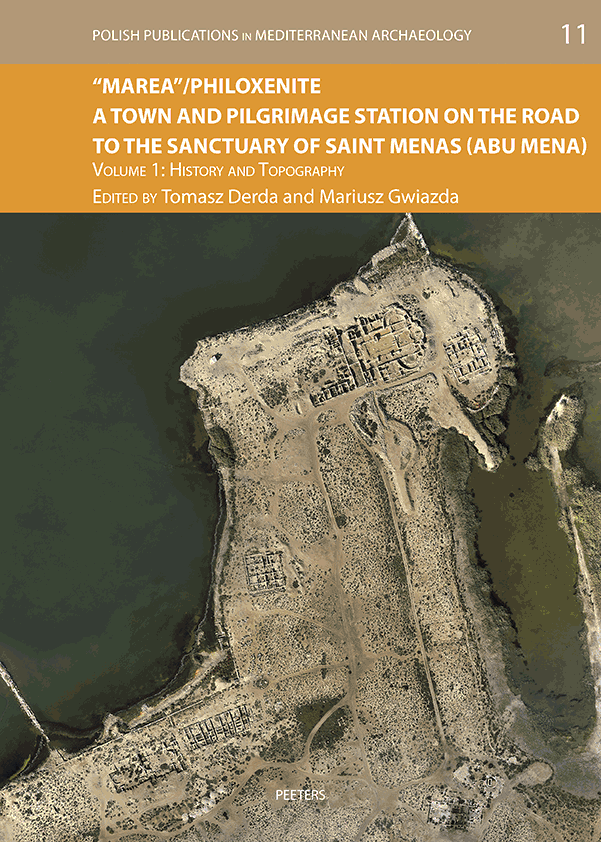
 Ajouter au panier
year: 2025
isbn: 9789042957503
e-isbn: 9789042957510
pages: XVI-227 p. + 2 maps
"Marea"/Philoxenite: A Town and Pilgrimage Station on the Road to the Sanctuary of Saint Menas (Abu Mena). Volume 1
History and Topography
editeurs:
Résumé:
Philoxenite was a Byzantine foundation established on the southern shore of Lake Mareotis in the sixth century AD. Conceived as a station for pilgrims en route to the sanctuary of St Menas at Abu Mena, it was founded by Flavius Theodorus Philoxenus Soterichus, consul of the East in 525. For nearly two centuries, the town provided accommodation, infrastructure, and services for the expanding movement of Christian pilgrims.
This first volume of the new series “Marea”/Philoxenite. A Town and Pilgrimage Station on the Road to the Sanctuary of Saint Menas (Abu Mena) brings together historical, topographical, and environmental perspectives on the site. It opens with an overview of the historical context of pilgrimage in the region and the role of Philoxenite within the wider network centred on Abu Mena. Subsequent chapters examine the town’s founder, the literary sources that mention it, and the transformations of the Mareotis region during the Byzantine and early Islamic periods.
The volume then turns to the archaeology of the site itself. It traces the history of exploration since the eighteenth century, proposes a division of the settlement into sectors, and analyses its urban layout. Non-invasive surveys, including extensive geomagnetic prospection, have revealed the structure of the town and its hinterland. Environmental studies provide further insights into local vegetation and climate change.
Taken together, these contributions present Philoxenite as a key component of the late antique pilgrimage landscape. The volume demonstrates what the town may have looked like and establishes a foundation for future, more detailed studies of its material culture.
This book is published open access. It can be downloaded here.
This first volume of the new series “Marea”/Philoxenite. A Town and Pilgrimage Station on the Road to the Sanctuary of Saint Menas (Abu Mena) brings together historical, topographical, and environmental perspectives on the site. It opens with an overview of the historical context of pilgrimage in the region and the role of Philoxenite within the wider network centred on Abu Mena. Subsequent chapters examine the town’s founder, the literary sources that mention it, and the transformations of the Mareotis region during the Byzantine and early Islamic periods.
The volume then turns to the archaeology of the site itself. It traces the history of exploration since the eighteenth century, proposes a division of the settlement into sectors, and analyses its urban layout. Non-invasive surveys, including extensive geomagnetic prospection, have revealed the structure of the town and its hinterland. Environmental studies provide further insights into local vegetation and climate change.
Taken together, these contributions present Philoxenite as a key component of the late antique pilgrimage landscape. The volume demonstrates what the town may have looked like and establishes a foundation for future, more detailed studies of its material culture.
This book is published open access. It can be downloaded here.
